
After more than four years of engaged research and fieldwork, Rewilding team members Wisse van Engelen, Emilie Köhler and Julia Brekl have completed their PhD projects. The projects contribute to the work packages 4 (Elephant assemblage), 5 (Lion assemblage) and 7 (Foot and mouth disease virus assemblage) of the Rewilding project and have generated new knowledge on conservation practices and changing human-livestock-wildlife relations in the Kavango Zambezi Transfrontier Conservation Area. All PhD candidates have been supervised by principal investigator Prof. Michael Bollig.
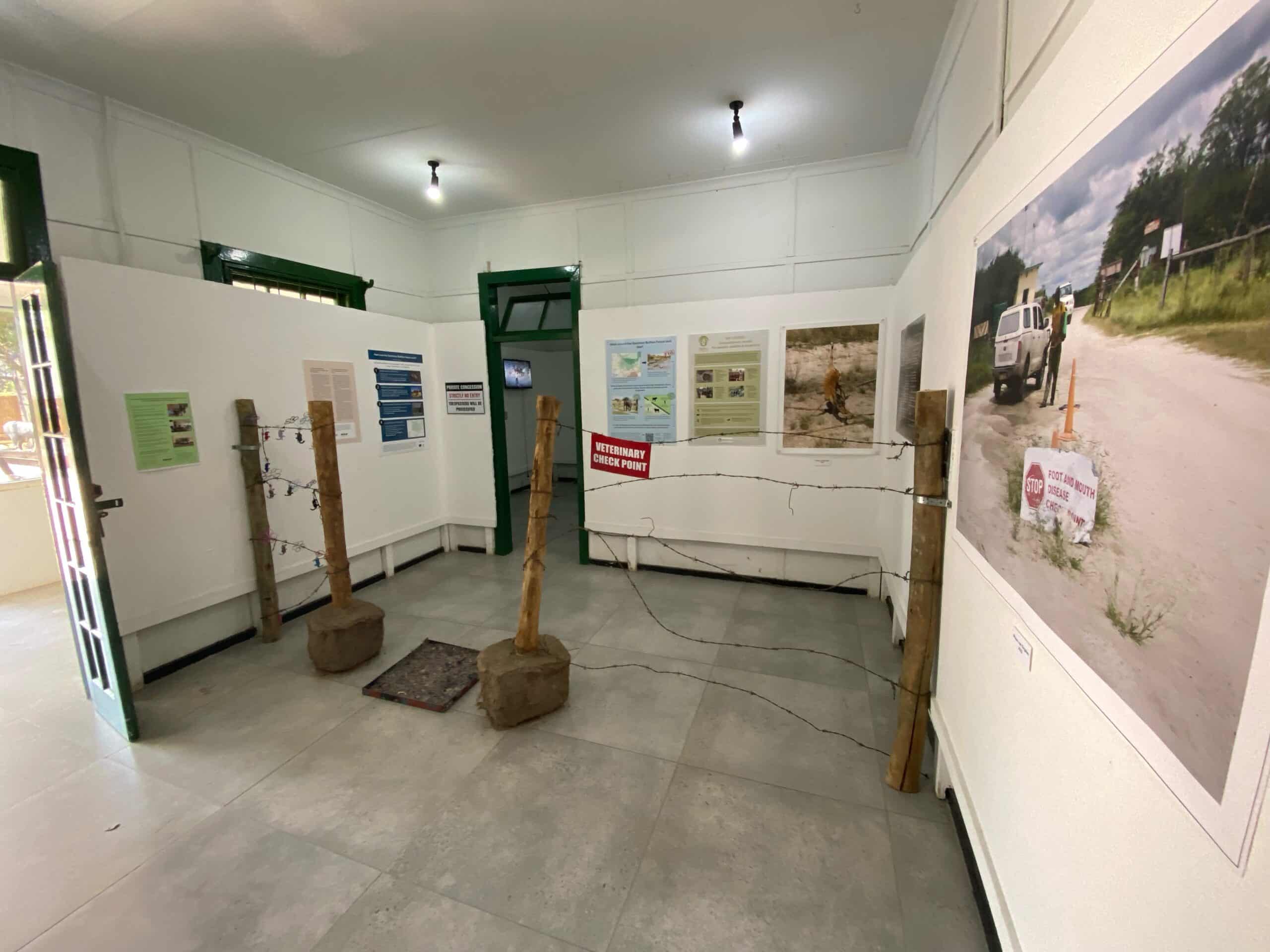
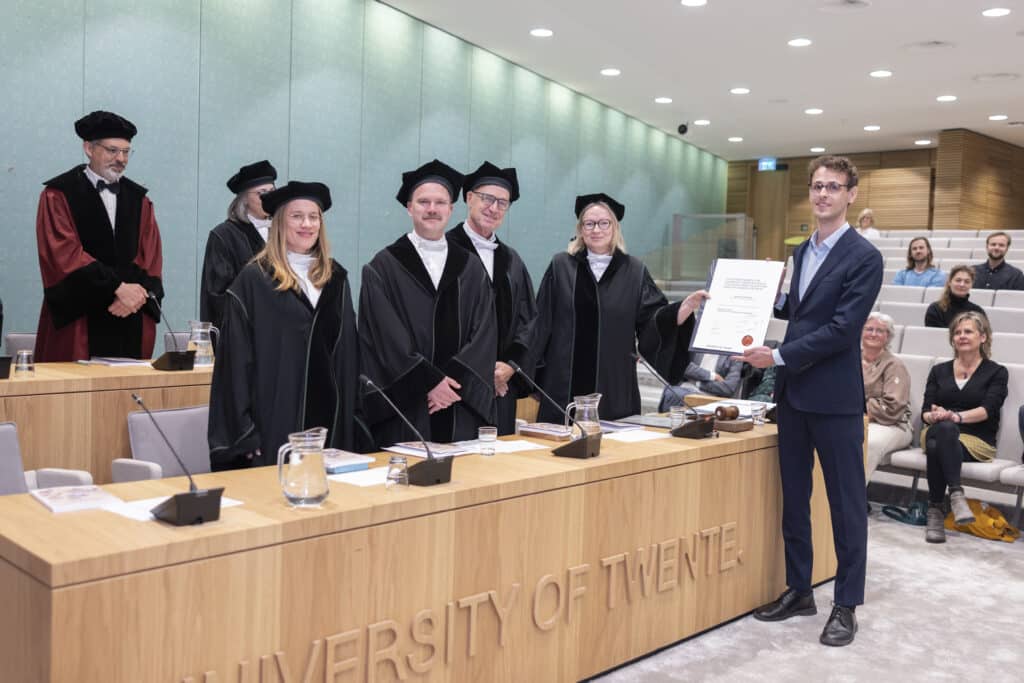
On April 23, 2026, Wisse van Engelen successfully defended his PhD thesis titled “Bordering Animals: Biosecurity in the Okavango Delta, Botswana” at the University of Twente. His thesis explores foot-and-mouth disease control and conservation as two forms of biosecurity that shape relations between wildlife, cattle and humans in the Okavango Delta both historically and contemporarily. The thesis highlights the importance of borders in shaping and understanding such relations, and develops a practice-based and more-than-human lens to offer a novel politicization of biosecurity.
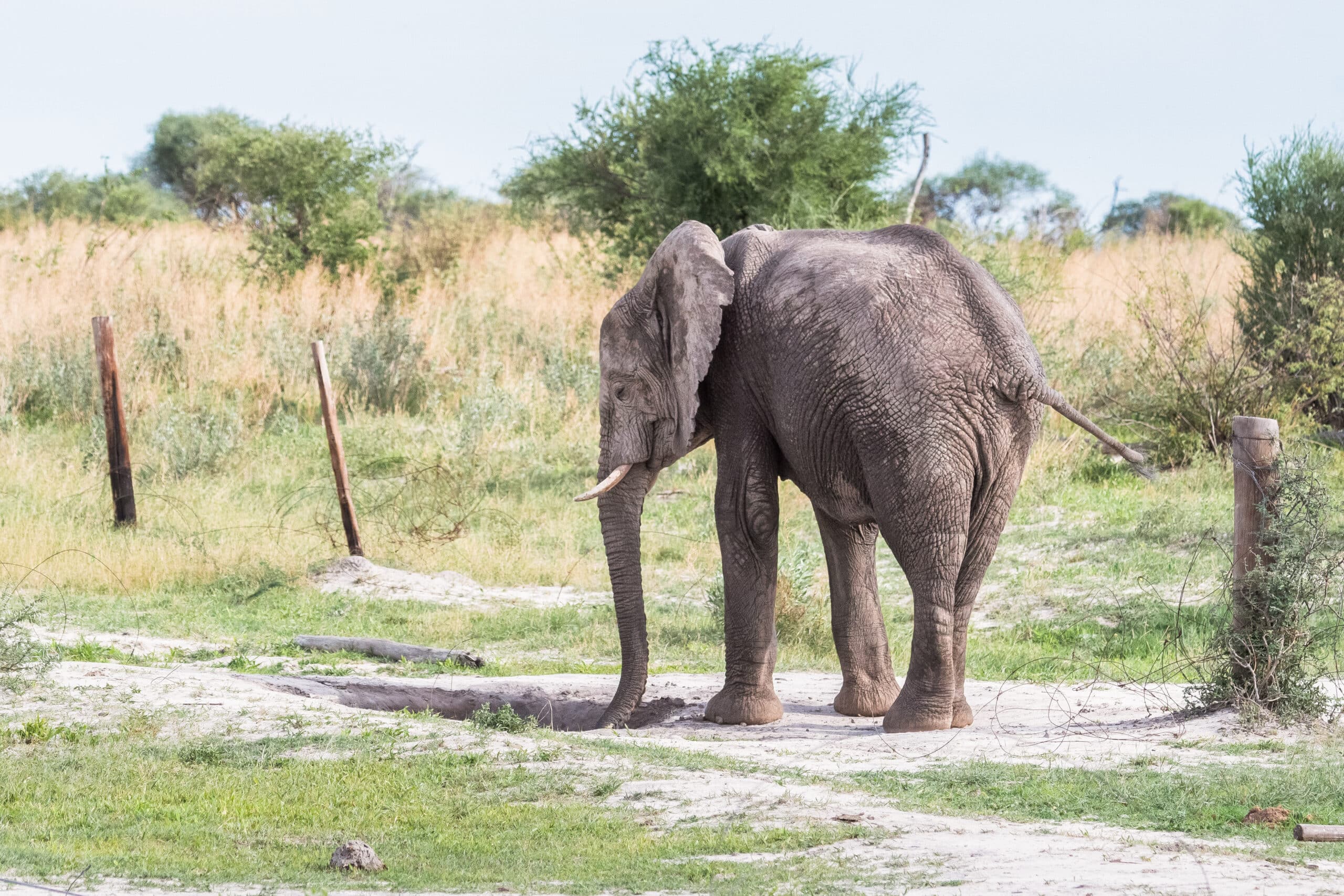
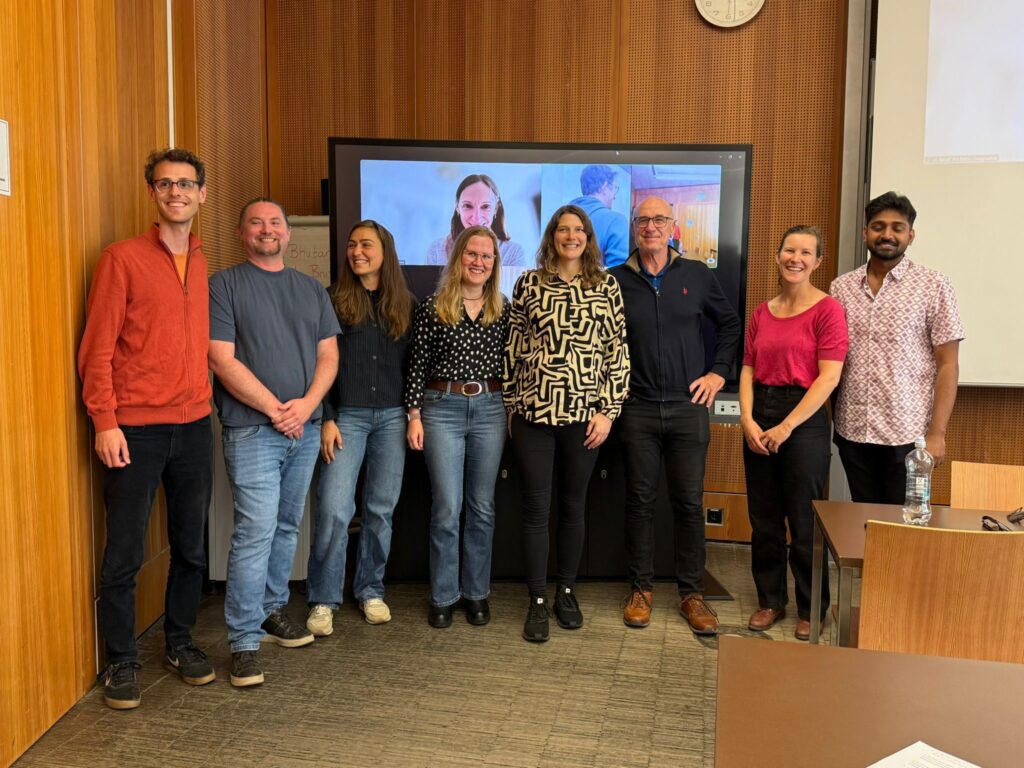
On May 4, 2026, Emilie Köhler defended her PhD thesis titled “Monitoring Elephants Across Borders: Digital Conservation in the Kavango-Zambezi Transfrontier Conservation Area” at the University of Cologne. Based on multi-sited ethnographic fieldwork in Namibia and Botswana, her PhD project investigated the interplay of technologies, elephants, humans, landscapes, knowledge practices leading to conservation infrastructures such as wildlife corridors.
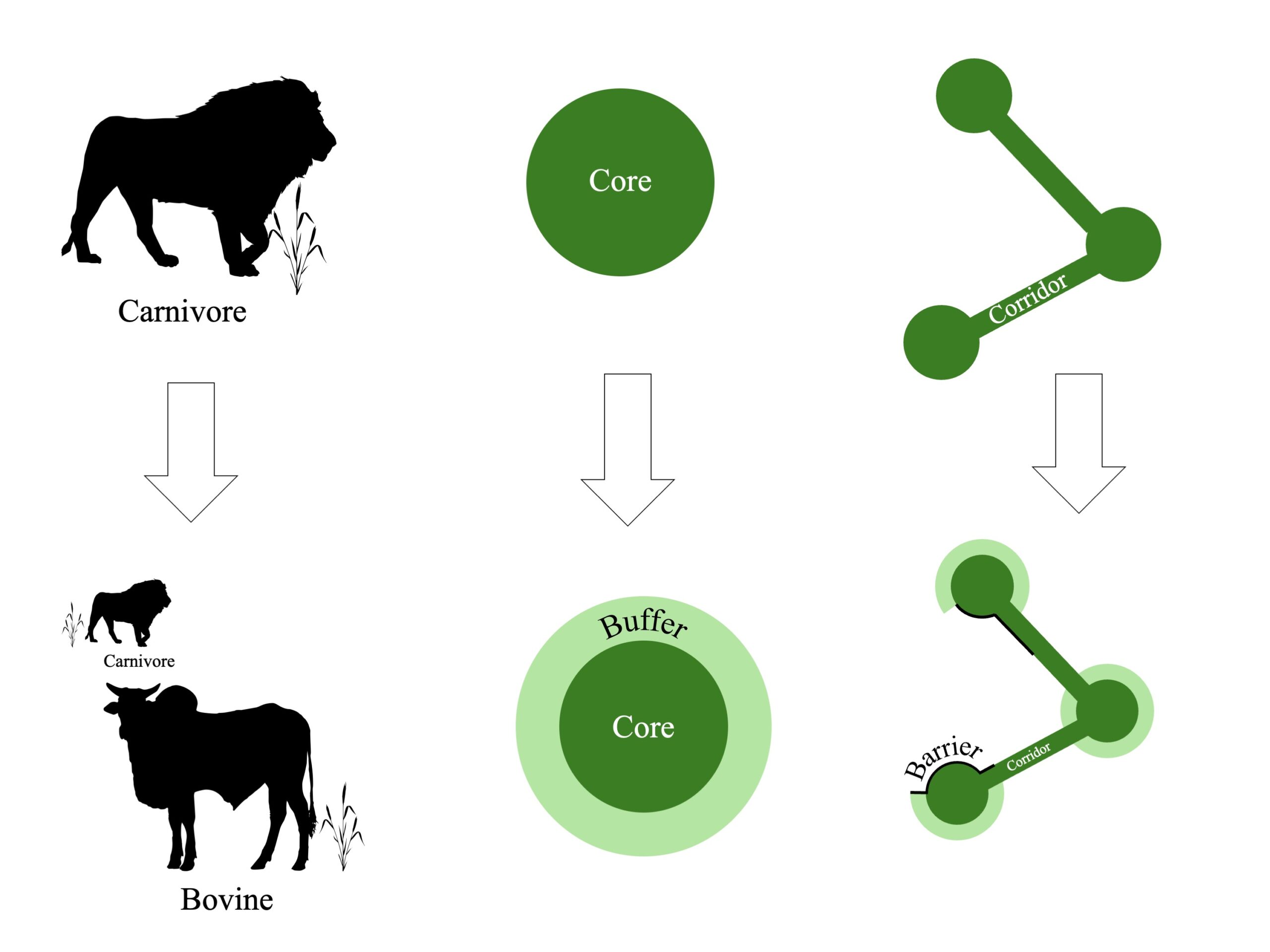
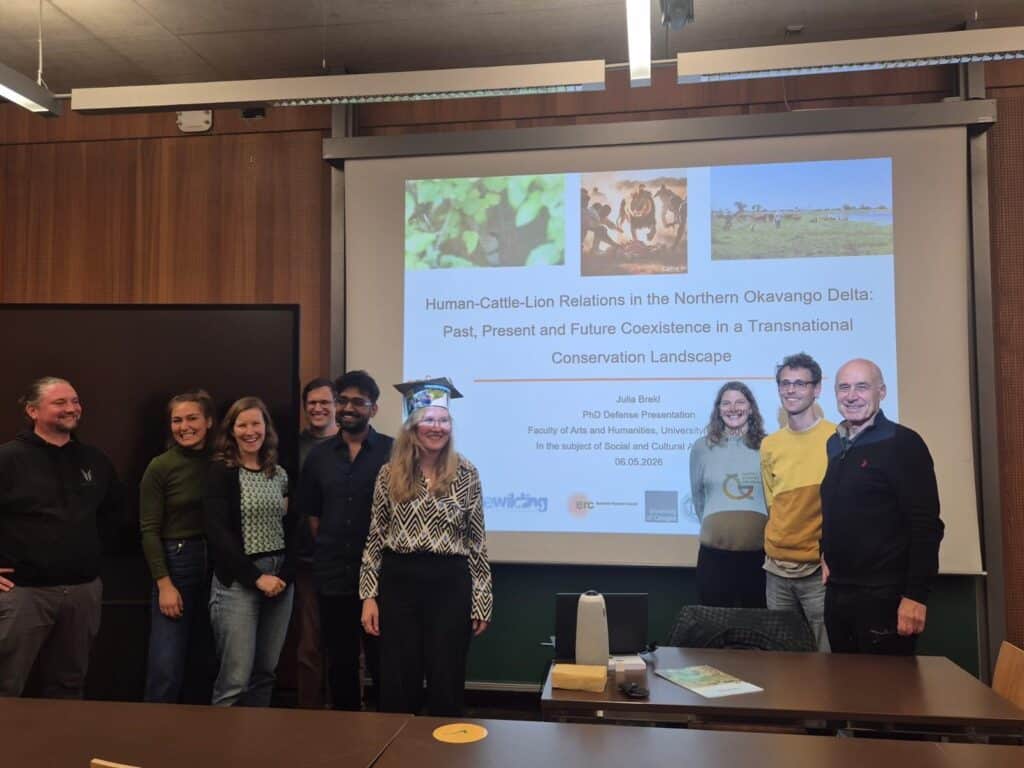
Lastly, on May 6, Julia Brekl defended her PhD thesis titled “Human-Cattle-Lion Relations in the Northern Okavango Delta: Past, Present and Future Coexistence” at the University of Cologne. Applying a multispecies-political ecology informed lens, Julia’s project examined the dynamic coexistence between lions, cattle and humans in a shared landscape and how their relations have been shaped by conservation, politics and land use change. Bringing together human and lion lifeworlds, and connecting different temporalities, onto-epistemologies, and spaces, the thesis contributes to a relational and political understanding of coexistence.
All three PhD projects emphasise the importance of addressing persistent power inequalities and non-human well-being in the management of human-livestock-wildlife interactions, wildlife research and conservation planning to enable sustainable and fair coexistence.
Wisse’s thesis can be found online: https://research.utwente.nl/en/publications/bordering-animals-biosecurity-in-the-okavango-delta-botswana/
Emilie and Julia are currently working on monographs based on their theses, which will appear in due course.